Solar panels are sold as maintenance-free, and in many ways they are. But anything that blocks sunlight from the cells reduces how much electricity they make, and plenty of things land on a Yorkshire roof.
What builds up on panels?
- Bird droppings, which block light completely where they land.
- Pollen and dust, especially from surrounding farmland in spring and summer.
- Traffic film on homes near main roads and motorways.
- Lichen and moss creeping in from frame edges on shaded or older installations.
- Leaves and seeds trapped along the bottom edge of the array.
Does dirt really affect output?
It depends on how dirty the panels are and how the system is wired. A light, even film makes a modest difference. Heavy soiling, or droppings covering parts of individual cells, can make a bigger difference, because shaded cells can drag down the output of the panels around them. The best way to know is to compare your generation figures before and after a clean.
Cleaning safely, without voiding the warranty
Most manufacturers recommend cleaning with soft brushes and water only. Detergents can leave residue that attracts more dirt, abrasive pads can scratch the glass and its coatings, and pressure washers can damage seals.
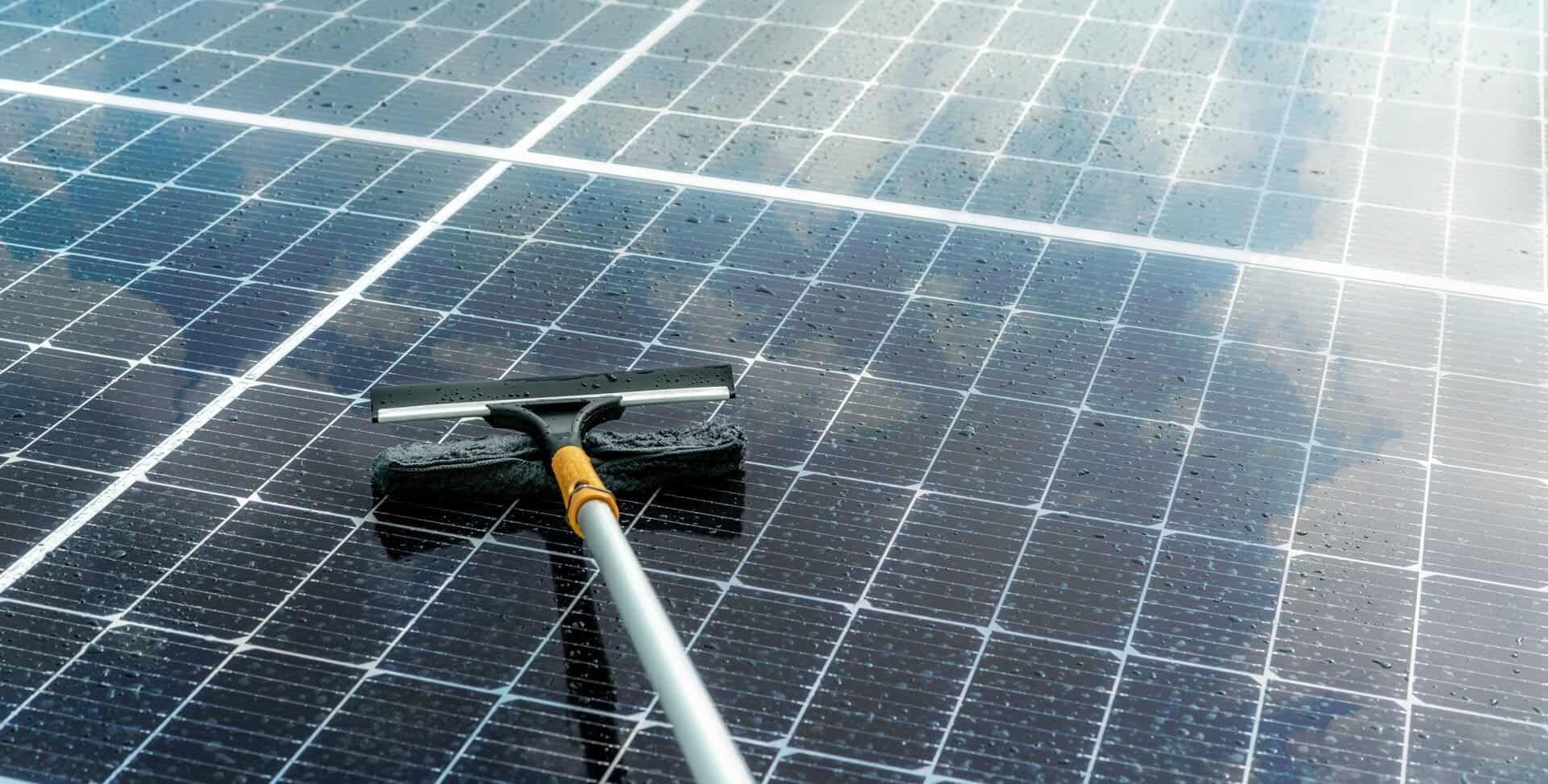
We clean panels with purified water and soft brushes on water-fed poles, usually from the ground. Pure water leaves no residue, so nothing is left to attract dust.
When to book
Late spring, after the pollen season and before the long summer days, is a good time for an annual clean. A second clean in autumn helps if your panels sit under trees.
See solar panel cleaning for homes orcommercial solar panel cleaning.
Quick answers
- Doesn’t rain keep solar panels clean?
- Rain rinses off some loose dust, but it does not shift bird droppings, lichen, pollen film or grime that has baked on, especially on low-pitched roofs.
- How often should solar panels be cleaned?
- Once or twice a year suits most homes. Panels near farmland, trees, busy roads or bird roosts may need more.
- Can I clean my own solar panels?
- Only if you can do it safely from the ground. Never climb onto a roof, and avoid detergents, abrasives and pressure washers.